Greek mountain tea is a traditional herbal infusion made from plants of the Sideritis genus. Known in Greece as “tsai tou vounou,” or mountain tea, it has been enjoyed for generations for its mild flavor, distinctive aroma, and connection to Mediterranean tea traditions.
Unlike green tea or black tea, Greek mountain tea does not come from the Camellia sinensis plant. It is an herbal infusion prepared from the dried stems, leaves, and flowers of certain Sideritis species. These hardy plants are associated with mountainous and rocky regions of the Mediterranean and Balkans. The European Medicines Agency includes species such as Sideritis scardica, Sideritis clandestina, Sideritis raeseri, and Sideritis syriaca in its assessment of Sideritis herb.
Greek mountain tea has a light, earthy and slightly floral character and can be enjoyed plain or served with lemon and honey. Beyond its role as an everyday herbal drink, Sideritis also has a long history of traditional use and has attracted scientific interest for its naturally occurring plant compounds.
In this guide, you’ll discover what Greek mountain tea is, what it tastes like, its traditional uses, what current research can and cannot tell us about it, and how to brew a flavorful cup at home.
What Is Greek Mountain Tea?
Greek mountain tea is an herbal infusion made from the dried aerial parts of plants belonging to the Sideritis genus. The name Sideritis covers many different species, several of which have a long tradition of being prepared as herbal tea in Greece and other parts of the Mediterranean and Balkans.
The plant typically grows in mountainous, rocky environments. According to the European Medicines Agency (EMA), Sideritis species are found on rocky slopes at elevations above 1,000 meters, although some species are also cultivated.Greece is home to several different Sideritis species. Examples include Sideritis scardica, associated with northern Greece and Mount Olympus; Sideritis raeseri, associated with areas including Mount Parnassus; and Sideritis syriaca, traditionally known as malotira on Crete.
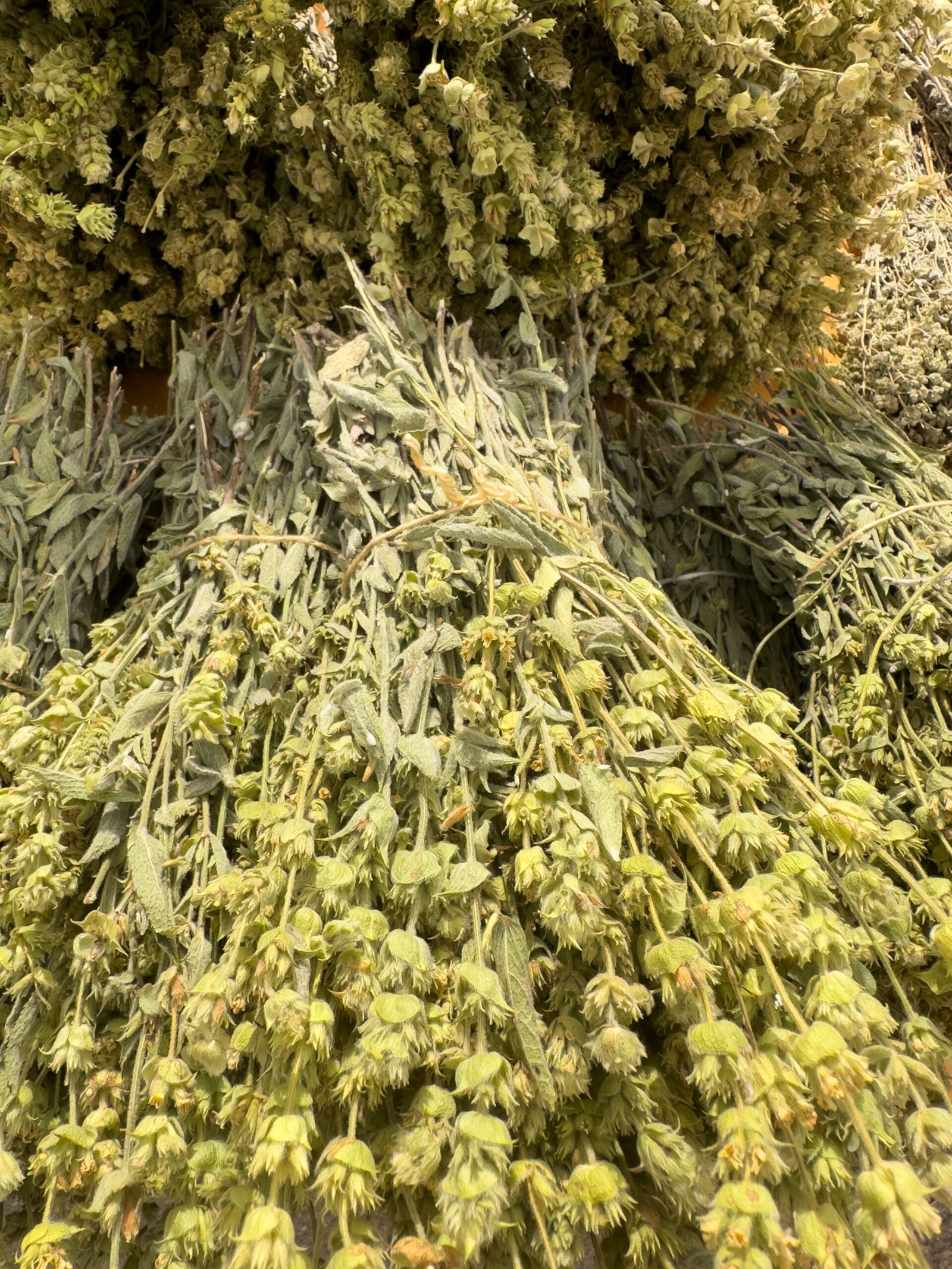
When sold for tea, the dried plant may include the stems, leaves, and flowers. These are steeped in hot water to produce a naturally caffeine-free herbal infusion with a gentle, aromatic character.
Although it is commonly called “tea,” Greek mountain tea is technically an herbal infusion, because it does not come from the Camellia sinensis plant used to produce green, black, white, and oolong tea.
What Does Greek Mountain Tea Taste Like?
Greek mountain tea has a mild, aromatic flavor that is usually less intense than many strongly flavored herbal infusions. Depending on the Sideritis species, growing conditions, and preparation method, its aroma and flavor can vary.
A brewed cup is often described as earthy, herbal, slightly floral, and gently sweet, sometimes with subtle citrus or pine-like notes. Research on the aromatic compounds of Sideritis scardica and Sideritis raeseri has identified a variety of naturally occurring volatile compounds, including pinene and other terpenes that contribute to the plants’ distinctive aroma.
The infusion is typically light in color and does not have the pronounced bitterness or astringency associated with some strongly brewed green or black teas. This makes it pleasant to drink on its own, although in Greece it is also commonly enjoyed with honey and lemon.
If you are trying Greek mountain tea for the first time, start by drinking it plain. This makes it easier to experience the natural flavor of the Sideritis before deciding whether you prefer to add honey, lemon, or another ingredient.
Traditional Uses of Greek Mountain Tea
For centuries, Greek mountain tea has been part of everyday life in many Greek villages and mountain communities. Rather than being viewed only as a beverage, it has traditionally been prepared as a warming herbal infusion during the colder months and served as a symbol of hospitality.
A Long Tradition in Greece
The Greek name tsai tou vounou literally means “tea of the mountain.” Shepherds and mountain families traditionally gathered wild Sideritis growing on rocky slopes, dried the flowering stems, and prepared the tea throughout the year. Today, both wild-harvested and cultivated Sideritis are used for herbal infusions.
Traditional Herbal Uses
According to the European Medicines Agency (EMA), preparations made from Sideritis herb have a long history of traditional use for:
- relieving cough associated with the common cold
- reasing mild stomach and digestive discomfort
These are recognized as traditional herbal uses, meaning they are based on long-standing use rather than conclusive clinical evidence for effectiveness.
What Does Research Say?
Modern research has identified a variety of naturally occurring compounds in Sideritis, including flavonoids, phenolic compounds, and essential oils. Scientists continue to study these compounds, but research into extracts and laboratory studies should not be interpreted as proof that drinking an ordinary cup of Greek mountain tea prevents or treats disease.
A Naturally Caffeine-Free Choice
One reason Greek mountain tea remains popular today is that it is naturally caffeine-free. Unlike green or black tea, it contains no Camellia sinensis leaves, making it a gentle herbal option that many people enjoy in the afternoon or evening.
How to Brew Greek Mountain Tea
Brewing Greek mountain tea is simple, and you do not need any special tea equipment. The dried stems, leaves, and flowers can be prepared either as a hot infusion or using the traditional method of gently simmering the herb in water.
What You'll Need
- 2–4 g dried Greek mountain tea
- 150–250 ml water
- Small pot or teapot
- Strainer
- Honey or lemon, optional
Traditional Method
1. Place the dried Sideritis in a small pot.
2. Add water and bring it to a gentle boil.
3. Reduce the heat and simmer gently for about 3–5 minutes.
4. Remove from the heat and allow the tea to rest briefly.
5. Strain into a cup.
6. Drink it plain or add a little honey and lemon to taste.
Simple Infusion Method
If you prefer not to simmer the herb, place the dried Sideritis in a teapot or infuser and pour hot water over it. Allow it to steep for several minutes before straining. The EMA herbal monograph describes medicinal herbal-tea preparations using 2–4 g in 150–200 ml of water, although everyday beverage preparation does not need to be treated as a medicinal dosage.
Brewing Tip
Start with a moderate amount of Sideritis and adjust the strength to your taste. Longer brewing or using more herb will generally produce a stronger aroma and flavor. Honey and lemon are traditional additions, but trying the first cup plain is a good way to appreciate the tea's natural character.
Greek Mountain Tea Compounds & What Research Says
Greek mountain tea contains a variety of naturally occurring plant compounds that have attracted scientific interest. Research on Sideritis species has identified compounds including flavonoids, phenolic acids, terpenoids, and other polyphenols.
Laboratory and animal studies have investigated Sideritis extracts for properties such as antioxidant, anti-inflammatory, antimicrobial, and gastrointestinal activity. However, these findings should not be interpreted as proof that an ordinary cup of Greek mountain tea can prevent or treat disease. The European Medicines Agency notes that the evidence for medicinal use of Sideritis is based primarily on its long-standing traditional use, rather than sufficient clinical trials demonstrating established effectiveness.
What About Human Studies?
Some human research does exist, but it is still limited. For example, a randomized placebo-controlled study involving adults aged 50–70 investigated specific doses of a Sideritis scardica extract and measured cognitive performance, mood, blood pressure, and cerebral blood flow. This is interesting research, but an extract used in a controlled study is not equivalent to drinking a normally brewed cup of mountain tea.
For this reason, claims that Greek mountain tea can “boost immunity,” “prevent disease,” “improve memory,” or provide other specific medical benefits go beyond what current evidence can confidently establish.
The best way to view Greek mountain tea is as a traditional caffeine-free herbal infusion with an interesting phytochemical profile, rather than as a treatment or cure.
Is Greek Mountain Tea Caffeine-Free?
Yes, Greek mountain tea is naturally caffeine-free. It is made from Sideritis rather than from the Camellia sinensis plant used to produce traditional green, black, white, and oolong teas.
This makes Greek mountain tea a useful option for people who prefer to avoid caffeine or want a warm herbal drink later in the day. Unlike decaffeinated tea, it does not require a process to remove caffeine because Sideritis is used as an herbal infusion rather than as true tea.
Keep in mind that caffeine content can change if Greek mountain tea is blended with ingredients that naturally contain caffeine, such as green or black tea. If you are buying a tea blend rather than pure Sideritis, check the ingredient list.
Is Greek Mountain Tea Safe? Side Effects & Precautions
Greek mountain tea has a long history of traditional use, but that does not mean that every preparation is appropriate for everyone. The European Medicines Agency (EMA) reports no known undesirable effects for the Sideritis herbal medicinal preparations covered by its monograph. However, available safety data are still limited.
People with a known allergy or hypersensitivity to Sideritis or other plants in the Lamiaceae (mint) family should avoid these preparations.
Pregnancy and Breastfeeding
The safety of Sideritis during pregnancy and breastfeeding has not been established. Because sufficient data are lacking, the EMA does not recommend its medicinal use during pregnancy or lactation.
Children
The EMA monograph also notes that use in children and adolescents under 18 has not been established because adequate data are lacking.
Medication Interactions
No interactions with other medicines were reported in the EMA monograph. However, “none reported” does not necessarily mean that interactions are impossible. If you regularly take medication or intend to use concentrated Sideritis extracts or supplements, it is sensible to discuss their use with a healthcare professional.
These precautions relate primarily to Sideritis herbal medicinal preparations assessed by the EMA. An occasional cup used as a beverage is not necessarily equivalent to a standardized medicinal preparation or concentrated extract.
Frequently Asked Questions About Greek Mountain Tea
Is Greek Mountain Tea the Same as Regular Tea?
No. Greek mountain tea is made from plants of the Sideritis genus, while green, black, white, and oolong tea come from Camellia sinensis. Technically, Greek mountain tea is therefore an herbal infusion rather than a true tea.
What Is Greek Mountain Tea Called in Greece?
In Greece, it is commonly known as tsai tou vounou (τσάι του βουνού), meaning “mountain tea.” Different regions may also associate mountain tea with particular Sideritis species. The EMA assessment notes several regional names and species used throughout Greece and the Balkans.
What Is Greek Mountain Tea Traditionally Used For?
Sideritis has a long history of traditional herbal use. The European Medicines Agency recognizes traditional medicinal use of certain Sideritis preparations for relieving cough associated with a cold and mild stomach and intestinal discomfort. These conclusions are based on long-standing traditional use, not sufficient clinical trials proving effectiveness.
Can You Drink Greek Mountain Tea Every Day?
Greek mountain tea is commonly consumed as an herbal beverage, but there is no need to claim that everyone should drink a specific amount every day. Individual circumstances matter, particularly during pregnancy, breastfeeding, when using herbal extracts or supplements, or when managing a medical condition.
Can You Drink Greek Mountain Tea at Night?
Because pure Greek mountain tea is a caffeine-free herbal infusion, it can be a suitable evening drink for people who want to avoid caffeine. Avoid making claims that it will necessarily improve sleep, however, because that is a different question from simply being caffeine-free.
Can You Add Honey and Lemon?
Yes. Honey and lemon are traditional additions to Greek mountain tea and complement its mild herbal flavor. The EMA's assessment report also describes the traditional preparation as boiling the stems, leaves, and flowers and often serving the resulting drink with honey and lemon.
Where Does Greek Mountain Tea Grow?
Various Sideritis species grow in mountainous and rocky areas of Greece and other parts of the Balkans and Mediterranean region. The exact species varies by location, so “Greek mountain tea” does not refer to only one single Sideritis species.
Final Thoughts on Greek Mountain Tea
Greek mountain tea is more than simply another herbal drink. Made from Sideritis, it has a long connection with Greek mountain regions and remains an important part of traditional tea culture.
Its mild, aromatic flavor, naturally caffeine-free character, and simple preparation make it an interesting alternative to traditional green or black tea. While Sideritis contains a variety of plant compounds and continues to be studied, its traditional reputation should not be confused with clinically proven health benefits. The European Medicines Agency bases its recognized medicinal uses primarily on long-standing traditional use.
Whether you enjoy it plain or with a little honey and lemon, Greek mountain tea offers a simple way to explore one of Greece's best-known herbal tea traditions.
Continue exploring:
How to Brew Tea Properly – Learn about water temperature, steeping time, and practical brewing techniques.
Essential Tea Equipment: What You Really Need to Brew Tea – Discover which brewing tools are useful and which ones you can skip.
Tea Guide – Explore green, black, white, oolong, yellow, and Pu-erh tea.