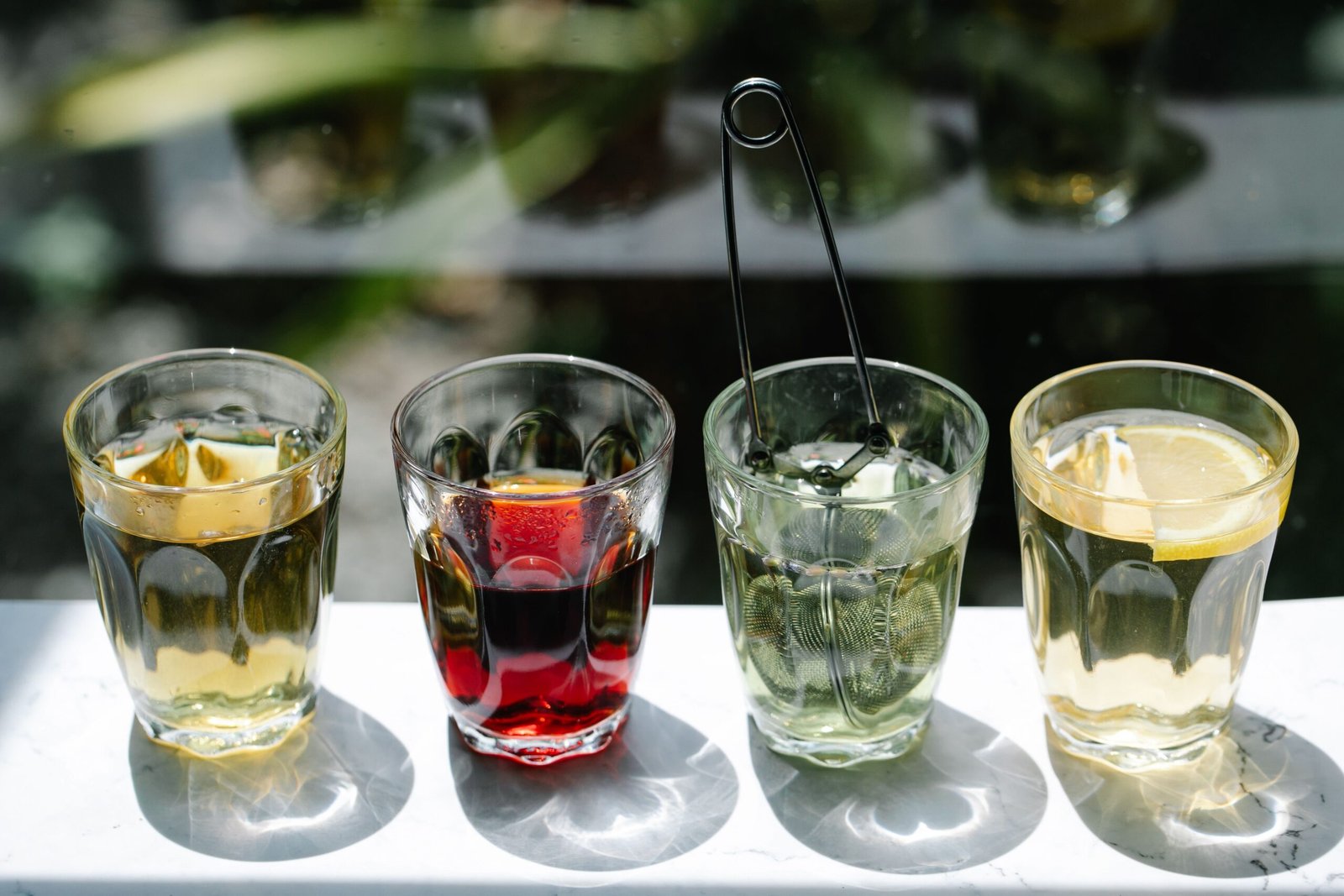
Caffeine in tea can feel confusing — unlike coffee, where a cup is roughly a cup, tea's caffeine content varies quite a bit depending on the type, and even how you brew it.
Why Caffeine Levels Differ Between Teas
All "true" teas — green, black, white, and oolong — come from the same plant, Camellia sinensis. The difference in caffeine mostly comes down to how the leaves are processed (oxidized, rolled, aged) and which part of the plant is used, rather than the tea being a completely different plant. Herbal teas, on the other hand, aren't made from Camellia sinensis at all, which is why they're naturally caffeine-free.
Caffeine in Tea by Type
Green Tea — around 25–45 mg of caffeine per cup. Made from minimally processed leaves, green tea tends to be milder in caffeine than black tea, though this can vary depending on the specific variety.
White Tea — around 15–30 mg per cup. Made from young leaves and buds with the least processing of all true teas. It's often assumed to have the least caffeine, but this isn't always the case — it depends more on the leaf-to-water ratio than on the "white" classification itself.
Black Tea — around 40–70 mg per cup. Fully oxidized, which generally gives it the boldest flavor and typically the highest caffeine among true teas.
What Actually Changes the Caffeine Content
The type of tea is only part of the story. A few things can shift caffeine levels more than people expect:
- Steeping time — a longer steep pulls out more caffeine, regardless of tea type.
- Water temperature — hotter water extracts caffeine faster.
- Leaf form — loose leaf and finely cut leaves (common in tea bags) release caffeine differently; more surface area generally means faster extraction.
- Amount of tea used — more leaves per cup means more caffeine, straightforwardly.
So a strongly steeped green tea can sometimes have more caffeine than a quickly brewed black tea — the "type" isn't a fixed number, more of a general range.
Personally, green tea is what I reach for most, with white tea a close second. I drink tea throughout the day, and in the evening, if I feel like having something, I'll go for a more relaxing, caffeine-free option instead of another caffeinated cup.
Choosing Tea Based on Time of Day
If you're mindful of caffeine, a simple approach is to keep true teas (green, white, oolong, black) for the morning and early afternoon, and switch to herbal infusions later in the day. That way, you still get to enjoy a warm cup in the evening without it affecting your sleep.
The Bottom Line
There's no single "correct" caffeine number for green, white, oolong, or black tea — only general ranges that depend on the tea itself and how you brew it. If caffeine timing matters to you, herbal teas are the most reliable caffeine-free choice, while true teas give you a spectrum to choose from depending on how alert (or relaxed) you want to feel.
Frequently Asked Questions
Does decaf tea have zero caffeine? Not quite. Decaffeinated tea typically still contains a small amount of caffeine — usually around 2–5 mg per cup — since the decaffeination process removes most, but not all, of it. If you need to be completely caffeine-free, herbal tea is a safer choice than decaf.
Is matcha higher in caffeine than regular green tea? Yes, generally. Because matcha is made from whole, ground tea leaves rather than steeped and removed, you end up consuming the entire leaf. This typically puts matcha's caffeine content noticeably higher than a standard cup of steeped green tea — often in the 60–80 mg range.
Does cold brew tea have less caffeine than hot brewed tea? Usually, yes. Cold brewing extracts caffeine more slowly, so a cold-brewed cup often ends up with somewhat less caffeine than the same tea steeped hot for the same amount of tea used — though steeping time still plays a role either way.
One Response