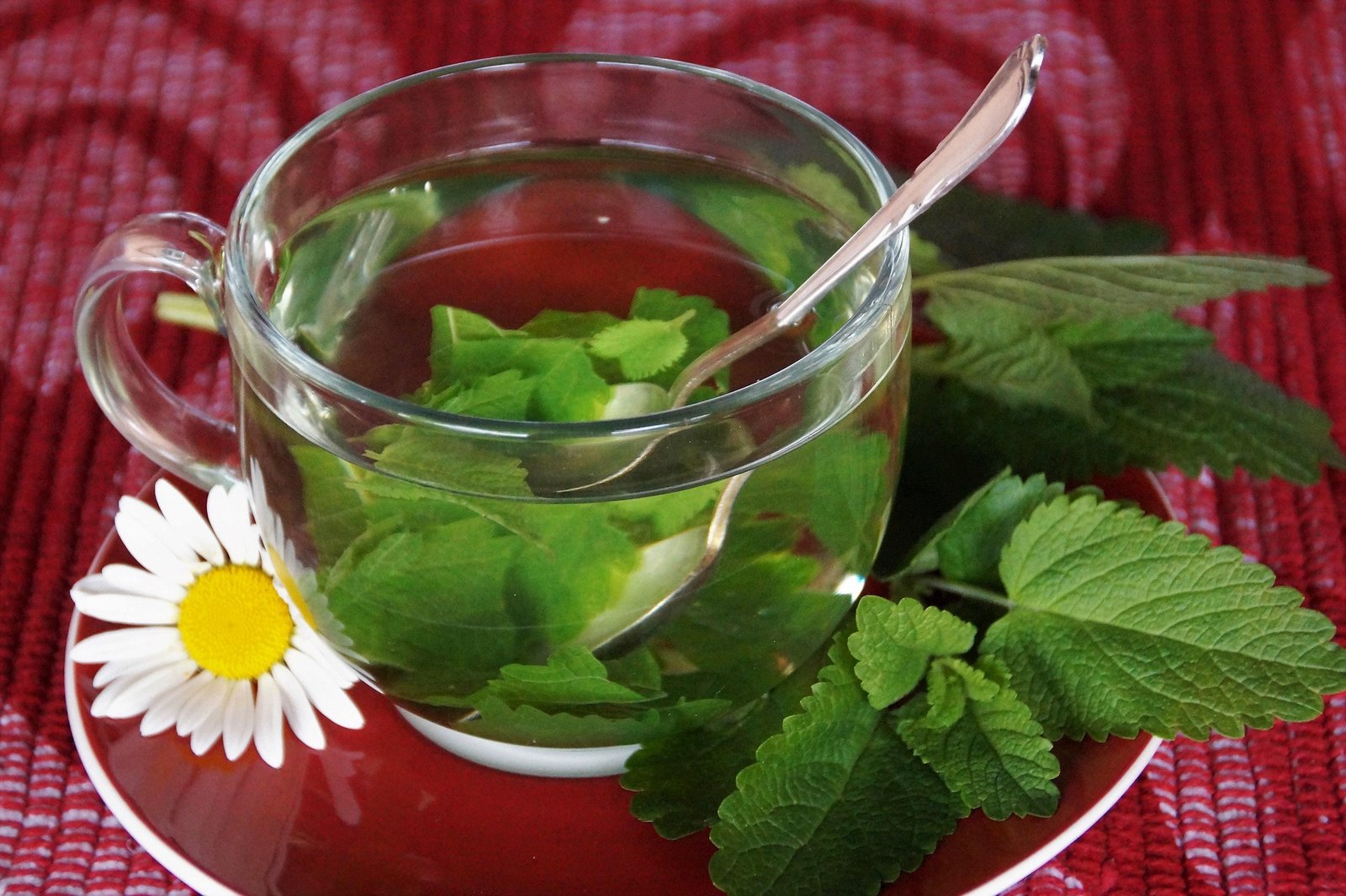
Lemon balm tea benefits have made this gentle herbal infusion a popular choice for people looking for a naturally caffeine-free drink. Made from the leaves of Melissa officinalis, lemon balm belongs to the mint family and has a mild, fresh flavor with subtle lemon notes. It has a long history of traditional use, particularly in calming herbal preparations, although research specifically on lemon balm tea is still limited. In this guide, we’ll explore 10 potential benefits of lemon balm tea, what current research can and cannot tell us, how to prepare it, and important precautions to consider.
1. Naturally Caffeine-Free
One of the simplest lemon balm tea benefits is that pure lemon balm tea is naturally caffeine-free. Lemon balm is an herbal infusion made from the leaves of Melissa officinalis, rather than from the Camellia sinensis plant used to produce green, black, white, and oolong tea. This makes lemon balm tea a convenient option when you want a warm herbal drink without adding caffeine, including later in the day. If you buy a commercial blend, check the ingredients because lemon balm can be combined with caffeine-containing teas.
2. Traditionally Used for Mild Stress and Relaxation
Lemon balm has a long history of traditional use for calming purposes. The European Medicines Agency recognizes melissa leaf as a traditional herbal medicine for relieving mild symptoms of stress, while also emphasizing that this conclusion is based largely on long-standing use rather than strong clinical evidence. More recent reviews suggest promising effects on stress and anxiety-related outcomes, but studies have used different lemon balm preparations and more robust clinical trials are still needed.
3. May Support a Calm Evening Routine
Lemon balm is traditionally used to help relieve mild symptoms of stress and to support sleep, which makes lemon balm tea a natural fit for an evening routine. The European Medicines Agency recognizes these uses based primarily on lemon balm’s long-standing traditional use, while noting that clinical evidence is still insufficient for firm conclusions. Recent research on standardized lemon balm extracts has also shown promising sleep-related results, but these findings should not automatically be applied to an ordinary cup of lemon balm tea because the preparations are different.
4. Traditionally Used for Mild Digestive Discomfort
Another traditional use of lemon balm involves mild digestive complaints. The European Medicines Agency recognizes melissa leaf for the symptomatic relief of problems such as bloating and flatulence, again based on long-standing traditional use rather than strong clinical-trial evidence. A warm cup of lemon balm tea may therefore be an enjoyable option after a meal, but it should not be presented as a treatment for persistent digestive problems.
5. Contains Naturally Occurring Plant Compounds
Lemon balm contains a variety of naturally occurring plant compounds, including phenolic acids and flavonoids. One of its best-known constituents is rosmarinic acid, alongside compounds such as caffeic acid and several flavonoids. These compounds have demonstrated antioxidant activity in laboratory research. However, antioxidant activity observed in laboratory studies should not be interpreted as proof that drinking lemon balm tea prevents or treats disease.
6. May Support a Calm Mood
Human studies have explored lemon balm for its potential effects on mood and stress. A systematic review of clinical trials found improvements in anxiety-related measures, but researchers cautioned that the studies were small and varied considerably in their methods. Importantly, much of this research used standardized lemon balm extracts rather than ordinary lemon balm tea. For this reason, a cup of lemon balm tea can be enjoyed as part of a calming routine, but it should not be presented as a treatment for anxiety or depression.
7. May Support Attention and Cognitive Performance
Lemon balm has also been studied for possible effects on attention and cognitive performance. In a small randomized, placebo-controlled study involving healthy adults, certain doses of a standardized Melissa officinalis extract were associated with changes in attention, memory, calmness, and alertness. However, the study involved only 20 participants and used a standardized extract rather than ordinary lemon balm tea. These findings are interesting, but they are not enough to conclude that drinking lemon balm tea improves memory or concentration
8. Traditionally Used to Aid Sleep
Another reason people are interested in lemon balm tea benefits is its long-standing association with sleep. The European Medicines Agency recognizes melissa leaf as a traditional herbal medicine used to aid sleep and relieve mild symptoms of stress. However, this recognition is based primarily on long-standing traditional use because the available clinical evidence is not strong enough to establish a well-proven therapeutic effect. A warm cup of lemon balm tea can therefore be part of an evening routine, but it should not be presented as a treatment for insomnia.
9. Easy to Enjoy Hot or Cold
One practical lemon balm tea benefit is its versatility. Its mild herbal flavor with fresh lemon-like notes can be enjoyed as a warm infusion or chilled and served over ice. Lemon balm has a long history of use both as an herbal preparation and as a flavoring ingredient.For a refreshing variation, let freshly brewed lemon balm tea cool and serve it over ice with a slice of lemon or a few fresh mint leaves. If you prefer a sweeter drink, a small amount of honey can also complement its gentle flavor.
10. A Simple Addition to a Caffeine-Free Tea Routine
Lemon balm tea can add variety to a caffeine-free herbal tea routine, especially if you already enjoy herbs such as chamomile, lavender, or peppermint. Its traditional uses for mild stress, sleep support, and mild digestive complaints make it particularly interesting as an evening herbal drink, although these uses are based largely on long-standing traditional use rather than strong clinical evidence specifically for lemon balm tea.
For everyday enjoyment, lemon balm tea is best viewed as a pleasant herbal beverage rather than a treatment for anxiety, insomnia, or digestive conditions. Research also shows that results can vary depending on the preparation used, so findings from concentrated extracts should not automatically be applied to an ordinary cup of tea.
How to Make Lemon Balm Tea
One practical advantage among lemon balm tea benefits is how simple this herbal drink is to prepare at home The European Medicines Agency’s herbal monograph describes an infusion using 1.5–4.5 g of dried, cut lemon balm leaf in about 150 ml of boiling water. For an everyday cup, place the dried leaves in a tea infuser or teapot, pour over freshly boiled water, and allow the leaves to steep before straining.
Step 1: Measure the Lemon Balm
For one cup, measure approximately 1.5–4.5 g of dried lemon balm leaves. If you are using loose leaves rather than a pre-measured tea bag, a small kitchen scale gives you the most accurate amount. Make sure you are using Melissa officinalis leaves intended for food or herbal-tea preparation rather than ornamental plant material.
Step 2: Add Boiling Water
Place the measured dried lemon balm leaves in a teapot, mug, or tea infuser. Pour about 150 ml (5 fl oz) of boiling water over the leaves, making sure they are fully covered. The European Medicines Agency describes lemon balm herbal tea as an infusion prepared with 1.5–4.5 g of the dried leaf in 150 ml of boiling water.
Step 3: Let the Lemon Balm Steep
Allow the lemon balm to steep before straining. Traditional preparation guidance generally uses a short infusion period; the EMA monograph specifies the herb and water quantities, while its supporting assessment describes lemon balm specifically as an herbal infusion.For an everyday cup, a practical steeping time is about 5 to 10 minutes.
A shorter steep produces a lighter flavor, while a longer steep creates a stronger herbal taste.
Step 4: Strain the Lemon Balm Tea
After steeping, remove the tea infuser or strain the lemon balm leaves through a fine-mesh strainer. The EMA’s traditional preparation guidance describes lemon balm as an herbal infusion made from dried Melissa officinalis leaves; older EMA monograph guidance specifies steeping for about 5 to 15 minutes.
Let the tea cool slightly before drinking so it is comfortably warm. You can enjoy it plain to appreciate its mild, fresh herbal flavor.
Step 5: Add Optional Flavor
Lemon balm tea has a naturally mild flavor with subtle lemon-like notes, so it can be enjoyed without adding anything. If you prefer a sweeter cup, stir in a small amount of honey after the tea has cooled slightly. A slice of fresh lemon can strengthen the citrus character, while a few mint leaves can give the drink a fresher finish.
Keep additions simple so they do not overpower the delicate flavor of the lemon balm itself.
Step 6: Enjoy Your Lemon Balm Tea
Once the leaves have been strained, allow the tea to cool to a comfortable drinking temperature. Lemon balm has a mild herbal taste with fresh lemon-like notes, so it can be enjoyed on its own or with a small amount of honey or lemon. If you are drinking it as part of an evening routine, enjoy it slowly while winding down rather than expecting an immediate sleep-inducing effect.
The European Medicines Agency recognizes melissa leaf as a traditional herbal medicine for relieving mild symptoms of stress and aiding sleep, but emphasizes that these uses are based on long-standing use rather than strong clinical evidence.
How Much Lemon Balm Tea Should You Drink?
There is no single scientifically established amount of lemon balm tea that everyone needs to drink. The EMA monograph for traditional medicinal use describes 1.5–4.5 g of dried lemon balm leaf in 150 ml of boiling water, one to three times daily for adults and adolescents over 12 years old. This dosage refers to traditional herbal medicinal use and should not be interpreted as a requirement for everyday tea drinking.
For ordinary enjoyment, starting with one cup allows you to see how you respond. If you intend to use lemon balm regularly for a specific health concern, particularly alongside medication, it is sensible to discuss this with a healthcare professional.
Can You Drink Lemon Balm Tea Every Day?
People interested in lemon balm tea benefits often wonder whether lemon balm tea can be enjoyed every day. The European Medicines Agency describes lemon balm preparations for traditional use in mild stress, sleep support, and mild digestive complaints, while noting that these uses are based primarily on long-standing use rather than strong clinical evidence. The EMA also advises seeking medical advice if symptoms being treated persist for more than two weeks.
For everyday enjoyment rather than treatment, starting with one cup and paying attention to how you respond is a sensible approach. Regular consumption should not be assumed to provide greater benefits simply because more tea is consumed.
Is Lemon Balm Tea Safe During Pregnancy?
Safety of lemon balm during pregnancy has not been established. The EMA monograph states that, because sufficient safety data are lacking, its use during pregnancy and breastfeeding is not recommended.If you are pregnant or breastfeeding, it is therefore better to speak with your healthcare professional before drinking lemon balm tea regularly or using concentrated lemon balm preparations.
Possible Side Effects and Precautions
Lemon balm preparations appear to be generally well tolerated, and the European Medicines Agency reported no known adverse effects in its herbal monograph at the time of assessment. However, research on ordinary lemon balm tea and long-term use remains limited. The EMA also notes that lemon balm preparations may impair the ability to drive or operate machinery in some people because of their traditional sedative use.
If you notice unusual symptoms after drinking lemon balm tea, stop using it and seek advice from a healthcare professional.
Can Lemon Balm Interact With Medications?
Information about interactions between lemon balm and medicines is limited. The EMA monograph states that interaction data are not available, which means we should not claim that lemon balm is proven to interact—or not interact—with specific medications. If you regularly take prescription medicines, particularly medicines that affect alertness or sleep, it is sensible to ask your doctor or pharmacist before using lemon balm regularly as a medicinal herbal preparation.
What Is the Best Time to Drink Lemon Balm Tea?
When considering lemon balm tea benefits, there is no scientifically established best time of day to drink lemon balm tea Because pure lemon balm tea is naturally caffeine-free, it can fit into a morning, afternoon, or evening routine. Lemon balm has traditionally been used for mild stress and to aid sleep, so many people may prefer drinking it later in the day or as part of their evening routine. The European Medicines Agency notes that these uses are based on long-standing traditional use rather than strong clinical evidence.
Can You Drink Lemon Balm Tea Before Bed?
Yes, lemon balm tea can be enjoyed before bed, particularly if you want a caffeine-free herbal drink. The EMA recognizes melissa leaf as a traditional herbal medicine used to relieve mild symptoms of stress and aid sleep. However, there is insufficient clinical evidence to conclude that an ordinary cup of lemon balm tea treats insomnia or reliably improves sleep. It is better viewed as a calming part of a nighttime routine rather than as a sleep medication.
Can Lemon Balm Tea Help With Digestion?
Lemon balm has traditionally been used for mild digestive complaints such as bloating and flatulence. The European Medicines Agency recognizes this traditional use, while also noting that the evidence is based mainly on long-standing use rather than strong clinical trials. A warm cup of lemon balm tea may therefore be a pleasant option after a meal, but it should not be presented as a treatment for persistent digestive problems.
Lemon Balm Tea vs. Chamomile Tea
Lemon balm tea and chamomile tea are both caffeine-free herbal drinks that can fit into a calming evening routine. Lemon balm has traditionally been used for mild stress, sleep support, and mild digestive complaints, while chamomile has a long history of traditional use for relaxation and sleep-related purposes. Neither tea should be considered a proven treatment for insomnia, and the better choice often comes down to flavor preference and how your body responds.
Can You Mix Lemon Balm and Chamomile Tea?
Yes, lemon balm and chamomile can be combined in an herbal tea blend. Both are naturally caffeine-free, and their mild flavors work well together.
Lemon balm has traditionally been used for mild stress and to aid sleep, while chamomile is also commonly associated with relaxation and bedtime routines.
However, evidence that either tea reliably treats insomnia is limited, so the combination is better viewed as a pleasant evening drink rather than a sleep treatment.
If you want to try the combination, start with a mild brew so that you can adjust the flavor to your preference. People with allergies to plants related to ragweed, chrysanthemums, marigolds, or daisies should be particularly cautious with chamomile because allergic reactions can occur.
Lemon Balm Tea vs. Lavender Tea
Lemon balm and lavender tea can both fit naturally into a caffeine-free evening routine, but their flavors are quite different. Lemon balm has a mild herbal taste with fresh lemon-like notes, while lavender has a stronger floral aroma. Lemon balm also has documented traditional use for mild stress, sleep support, and mild digestive complaints such as bloating and flatulence.
Neither should be treated as a proven cure for insomnia. If you prefer a fresh, subtle herbal flavor, lemon balm may suit you better; if you enjoy a more pronounced floral drink, lavender may be the more appealing choice.
Lemon Balm Tea vs. Peppermint Tea
Lemon balm tea and peppermint tea both belong to the mint family, but they have noticeably different flavors and traditional uses. Lemon balm has a mild, lemon-like aroma and has traditionally been used for mild stress, sleep support, and digestive complaints such as bloating and flatulence. Peppermint has a much stronger, cooling menthol flavor and is commonly associated with digestive comfort. The better choice depends largely on the flavor you prefer and when you plan to drink it. Lemon balm may fit particularly well into a quiet evening routine because of its traditional calming use.
Does Lemon Balm Tea Make You Sleepy?
Lemon balm has a long history of traditional use as a sleep aid, but that does not mean a cup of lemon balm tea will necessarily make you sleepy. The European Medicines Agency recognizes melissa leaf for helping with mild stress and aiding sleep on the basis of traditional use, while noting that clinical evidence has not been sufficient for firm conclusions. More recent research on lemon balm preparations shows promising sleep-related results, but different studies use different formulations and these findings cannot automatically be applied to ordinary lemon balm tea.
Frequently Asked Questions About Lemon Balm Tea Benefits
Lemon balm has been used traditionally for mild symptoms of stress, to aid sleep, and for mild digestive complaints such as bloating and flatulence. However, the European Medicines Agency emphasizes that these uses are supported primarily by long-standing traditional use, because the available clinical evidence is not strong enough to draw firm conclusions.
This distinction is important when discussing lemon balm tea benefits: an ordinary cup of lemon balm tea can be an enjoyable herbal drink, but it should not be presented as a treatment for anxiety, insomnia, or digestive disease.
Does Lemon Balm Tea Contain Caffeine?
Pure lemon balm tea is naturally caffeine-free because it is made from the leaves of Melissa officinalis rather than from the Camellia sinensis plant used for traditional caffeinated teas. This makes it a convenient herbal drink for people who want to avoid caffeine later in the day. If you buy a commercial lemon balm blend, however, check the ingredient list because other tea leaves or ingredients may have been added.
Can Lemon Balm Tea Help With Stress?
Lemon balm has traditionally been used to relieve mild symptoms of stress. The European Medicines Agency recognizes this use based on its long-standing history, while emphasizing that the available clinical evidence is not strong enough to establish a well-proven therapeutic effect. Some modern studies using lemon balm preparations have reported promising effects on stress and anxiety-related outcomes, but these studies have used different formulations and should not automatically be applied to ordinary lemon balm tea.
Can Lemon Balm Tea Help With Bloating?
Lemon balm also has a long history of traditional use for mild digestive discomfort. The EMA specifically recognizes melissa leaf for the symptomatic relief of mild gastrointestinal complaints, including bloating and flatulence. This recognition is based on traditional use rather than strong clinical-trial evidence. A warm cup of lemon balm tea may therefore be a pleasant choice after a meal, but persistent or severe digestive symptoms should not be treated with tea alone.
Can Lemon Balm Tea Help With Anxiety?
Lemon balm has been studied for its potential effects on anxiety. A systematic review and meta-analysis of clinical trials found improvements in anxiety scores compared with placebo, but the researchers emphasized that the available studies were few and varied considerably in their methods. Most studies also examined specific lemon balm preparations or extracts rather than an ordinary cup of lemon balm tea. (pubmed.ncbi.nlm.nih.gov)
For this reason, lemon balm tea can be enjoyed as part of a calming routine, but it should not be considered a treatment for anxiety.
How Long Does Lemon Balm Tea Take to Work?
There is no scientifically established amount of time for a cup of lemon balm tea to produce a calming or sleep-related effect. Research on Melissa officinalis has used different preparations, doses, and study designs, making it difficult to translate those findings into a specific timeline for ordinary tea.
A recent review also emphasizes that lemon balm’s effects can depend strongly on the preparation used.If you enjoy lemon balm tea in the evening, it is better to treat it as part of a consistent wind-down routine rather than expecting it to “work” within a certain number of minutes.
Does Lemon Balm Tea Help You Sleep Better?
Lemon balm has a long history of traditional use as a sleep aid. The European Medicines Agency recognizes melissa leaf for helping to relieve mild symptoms of stress and to aid sleep. However, this classification is based on long-standing traditional use, and the EMA notes that the available clinical studies are not strong enough to draw firm conclusions about effectiveness.
For that reason, lemon balm tea may be a pleasant caffeine-free addition to a relaxing bedtime routine, but it should not be described as a proven treatment for insomnia or as something that guarantees better sleep.
Is Lemon Balm the Same as Lemon or Lemon Verbena?
No. Lemon balm (Melissa officinalis) is a distinct herb and should not be confused with lemons or lemon verbena. Its name comes from the fresh, lemon-like aroma of its leaves. Lemon verbena is a different plant, Aloysia citrodora, even though both herbs are commonly used in herbal preparations and have citrus-like flavors.
Can Children Drink Lemon Balm Tea?
The European Medicines Agency recommends lemon balm herbal medicines only for adults and adolescents over 12 years of age. Use in children under 12 is not recommended because adequate safety information is lacking. This guidance applies to lemon balm preparations used medicinally, including herbal tea preparations described in the EMA monograph.If you are considering giving lemon balm tea regularly to a child, it is better to discuss it with a pediatrician or another qualified healthcare professional first.
What Does Lemon Balm Tea Taste Like?
Lemon balm tea has a mild herbal character with a fresh, subtle lemon-like aroma. Unlike peppermint, it does not have the same strong cooling menthol sensation, and it is generally much less floral than lavender. This gentle flavor makes it easy to drink on its own and also suitable for combining with ingredients such as lemon, mint, or a small amount of honey.
Can You Grow Lemon Balm for Tea?
Yes. Lemon balm (Melissa officinalis) is cultivated for its leaves, which can be harvested and used in herbal preparations. The EMA identifies the leaf as the part of the plant used for medicinal preparations, including herbal tea.If you grow your own lemon balm for tea, make sure the plant is correctly identified and has not been treated with pesticides or other products unsuitable for edible herbs. The leaves can be used fresh or dried for later use.
Can Lemon Balm Tea Be Made With Fresh Leaves?
Yes. Lemon balm tea can be prepared with fresh leaves as well as dried leaves. The EMA medicinal guidance is standardized around dried Melissa officinalis leaf, so there is no equivalent official fresh-leaf dose that we should present as medically established.For an everyday homemade infusion, gently rinse fresh lemon balm leaves, lightly crush or tear them to release their aroma, place them in a cup, and pour hot water over them. Let the leaves infuse until the flavor reaches the strength you prefer, then strain before drinking.Does Lemon Balm Tea Have Antioxidants?
Does Lemon Balm Tea Have Antioxidants?
Lemon balm contains several naturally occurring plant compounds, including phenolic acids and flavonoids. Rosmarinic acid is one of the characteristic compounds identified in Melissa officinalis, and laboratory research has demonstrated antioxidant activity associated with lemon balm and its constituents.However, the presence of antioxidant compounds does not mean that drinking lemon balm tea has been proven to prevent disease. A recent 2026 review emphasizes that lemon balm's biological effects can vary substantially depending on the preparation and that clinical evidence remains much more limited than laboratory research.
Can Lemon Balm Tea Help With Heart Health?
Lemon balm has been studied for several cardiovascular and metabolic markers, including blood pressure and cholesterol. A systematic review and meta-analysis found possible improvements in systolic blood pressure and total cholesterol, but the researchers emphasized that the number of studies was small and that several had a high risk of bias.Most importantly, these studies used specific lemon balm preparations or extracts rather than ordinary cups of lemon balm tea. Therefore, we should not claim that drinking lemon balm tea prevents heart disease or lowers cholesterol.
Can Lemon Balm Tea Lower Blood Pressure?
Some clinical research suggests that Melissa officinalis preparations may have a modest effect on blood pressure. However, the evidence is still limited, and the studies have used different preparations and doses. A recent review also emphasizes that lemon balm’s effects can vary substantially depending on how the plant is prepared.For this reason, lemon balm tea should not be used as a treatment for high blood pressure or as a replacement for prescribed medication. If you take blood-pressure medication and plan to use lemon balm regularly for medicinal purposes, discuss it with your healthcare professional.
Can Lemon Balm Tea Help With Headaches?
Lemon balm has a long history of traditional herbal use, but there is not enough reliable clinical evidence to say that drinking lemon balm tea prevents or treats headaches. The European Medicines Agency’s recognized traditional uses for melissa leaf focus on mild stress, aiding sleep, and mild digestive complaints, not headache treatment. For this reason, headache relief should not be listed as an established lemon balm tea benefit.
Is Lemon Balm Tea Safe for Long-Term Use?
Research specifically examining the long-term daily consumption of lemon balm tea is limited. The EMA’s assessment is based largely on long-standing traditional use and notes that conventional clinical safety data are limited.
For medicinal use, the EMA advises consulting a healthcare professional if the symptoms being treated continue for more than two weeks.
For ordinary tea drinking, this does not mean lemon balm must be avoided after two weeks; rather, there simply is not enough high-quality evidence to define an ideal long-term daily intake. If you use lemon balm regularly for a health condition or take medication, discussing ongoing use with a healthcare professional is sensible.
Final Thoughts on Lemon Balm Tea Benefits
Among the most practical lemon balm tea benefits is the fact that this mild herbal drink is naturally caffeine-free and easy to enjoy at different times of the day.. Its long history of traditional use for mild stress, sleep support, and digestive complaints such as bloating and flatulence makes it an interesting addition to a varied herbal tea routine.
However, many of these uses are supported primarily by long-standing traditional use rather than strong clinical evidence specifically involving ordinary lemon balm tea.
Overall, the most sensible way to approach lemon balm tea benefits is to enjoy the tea as part of a balanced lifestyle rather than treating it as a remedy for a medical condition. If you are pregnant or breastfeeding, take medication, or want to use lemon balm regularly for a specific health concern, speak with a qualified healthcare professional first.
One Response